

 Log In


February 20, 2016
 Offline

Hello to all and thanks in advance for any help.
I’m about to make my fish mold and cast of a yellow perch I caught. Not a record breaking perch by any means but my biggest one so far.
I’m using polyester resin and fiberglass resins for the mold, and then plaster to make the cast to go under my skin mount.
I think I have the majority of it figured out after watching a series of videos from the following link in which the author says he got most of his help and ideas from this forum.
http://hunting.wonderhowto.com…..ss-240507/
My questions are:
1: Do I need to use something on the body of the fish in order for it to release from the fiberglass?
2: The fish is currently in the freezer. Can I simply thaw out the fins so that they’ll move and then cast the mold, or should the fish be completely thawed out first before applying the fiberglass resin.
3: Is there any other prep work I should be aware of not shown in the video before proceeding with the mold?
I’m currently using an android phone to access the forums and searching is a little difficult. I apologize in advance if these questions have already been previously answered somewhere.
Thanks,
Kornbred

September 26, 2011
Offline


Hi Kornbred
First off thank you for joining the forum. The video you are referring to was done by Josh Knuth( I believe). I introduced him to fiberglass resin molding quite a few years ago. Josh is a great fish artist. The forum he was referring to was probably taxidermy.net .
He is molding and casting a fish for a complete replica, not a body for a skin mount. While you certainly could cast the body out of plaster, I do not know why you would want to when you could simply carve a foam form for small fish like a perch.
1.I would coat the fish with PVA and let that dry, then mold it.
2.I would completely thaw out the fish before molding so you can position it correctly.
3. I would spray all of the slime off with cold water before bedding and molding.
I am working on a complete course for Taxidermy Insider on molding and casting a fish. You can also check out my tutorial on this process here http://www.taxidermy.net/forum…..152.0.html
Taxidermy Talk Administrator
Stehling’s Taxidermy LLC http://www.stehlingstaxidermy.com
Taxidermy Insider / Learn Taxidermy Online http://www.taxidermyinsider.com
920.650.5457 a.n.stehling@gmail.com


February 20, 2016
Offline
Actually, nevermind the clay question. I think I’ve just done it. Should I put anything on the side going into the clay to keep it from sticking and being a pain to clean off or will the moisture from the clay be enough?
February 20, 2016
Offline
I somehow just managed to not post my last long-winded post. Lol. So here goes.
First off, thanks for your fast reply and much helpful information.
I know I could easily make a mold for the mount using foam but there’s no fun or challenge in that. I’ve been interested in fiberglass molds for quite some time only for different reasons, mostly speaker boxes and boat stuff but never had the time or attention span to do so. Now I’m a stay-at-home dad and properly medicated for my ADHD, so I figure I should give it a go.
Plus a friend gave me a large amount of polyester resin, hardener, pva and gelcoat. So I don’t really have a lot to lose except some time that I’d likely waste on something much less productive anyway. 😉
After I use the mold to make my fish mount I intend to use it again as shown in the video to make some replicas to tinker around with. That’s the reason I’m going with the mold over just making a foam mount.
I had asked in the post that I somehow failed to post about making clay from cat litter. I have figured it out now though. I live in a small town in Canada and the only options I have for purchasing clay are from Micheal’s Craft Store which is quite pricey and out of my budget. I bought a bag of cat litter for $6 and ran it through a grinder to a make a fine powder and mixed that with water. Instant clay base.
I’m sure there was something else I’d previously typed that I have now forgotten. It’ll come to me about 45secs after I hit the send button.
Thanks again,
Kornbred
September 26, 2011
Offline
Kornbred
I do not think you are fully understanding the concept behind the video. He is making a complete replica of the fish….no skin will be used. When I said to carve a foam form for it, I meant to do that if you are going to mount the perch as a skin mount. Carving is not easy to do and takes as much skill as molding/casting.
First we need to establish which you are planning on making—a complete replica fish or a mold of the body for a skin mount ?
I am not sure what he bedded the fish in the video, but we use High Fiber here. I guess ground up cat litter would also work.
Taxidermy Talk Administrator
Stehling’s Taxidermy LLC http://www.stehlingstaxidermy.com
Taxidermy Insider / Learn Taxidermy Online http://www.taxidermyinsider.com
920.650.5457 a.n.stehling@gmail.com
February 20, 2016
Offline

Aaron,
As I said I will first be making a plaster cast with the mold on which to mount the skin, after removal of the head and tail in the cast, and whatever sanding and adjustments are required for the correct fit. After I intend to use the same mold to try to tinker around with making replicas made of fiberglass and epoxy. Just like he did in the video.
Yes, I understand what you meant about the foam mannikins also. Personally, I think it’ll be much easier to make the fiberglass mold and cast it than to carve foam. I’m not really that great at carving anything. I have tinkered around with fiberglass and epoxies before, just never to make molds. Although, I did carve a Marvin the Martian head out of a log one time.
I’m pretty sure in the video he used a type of pottery clay. I’m just judging by the color. Instead, I made mine out of cat litter. I’m sure it’ll work just as well at the moment for the intended purpose.
What is “high fiber”?
Thanks,
Kornbred
September 26, 2011
Offline
ok, now I see what you are doing. Casting the fish and skin mounting it. Your plan is a bit different then what is normally done, but it could certainly work.
High Fiber is an asbestos substitute used for bedding fish etc for molding. McKenzie sells it.
Taxidermy Talk Administrator
Stehling’s Taxidermy LLC http://www.stehlingstaxidermy.com
Taxidermy Insider / Learn Taxidermy Online http://www.taxidermyinsider.com
920.650.5457 a.n.stehling@gmail.com

October 14, 2011
Offline
Kornbread, if your going to pull a cast from your mold for mounting purposes I’d pour 2 part foam into the mold. Plaster will be too heavy and clumsy to work with for a fish body. Your going to have a heck of a time securing your fish to habitat with a plaster body under that skin.
Chief Editor of The Taxidermy Journal~TTN News Contributor
February 20, 2016
Offline
Well, it seems I have made a crucial error. I didn’t pay close attention to the words in the video and mixed 50/50 bondo fiberglass resin to polyester resin. I’m assuming at this point that when used the words “bondo putty” he means the body filler and not the fiberglass resin. I’m getting the feeling that this mixture is not going to set and that I’ve very likely screwed this up beyond repair.
Edit: Now I feel like a complete moron for not knowing that “fiberglass resin” sold under the Bondo name is actually “polyester resin”! ?
Kornbred

October 14, 2011
Offline
Its all about learning. Now you know. 
Chief Editor of The Taxidermy Journal~TTN News Contributor
February 20, 2016
Offline
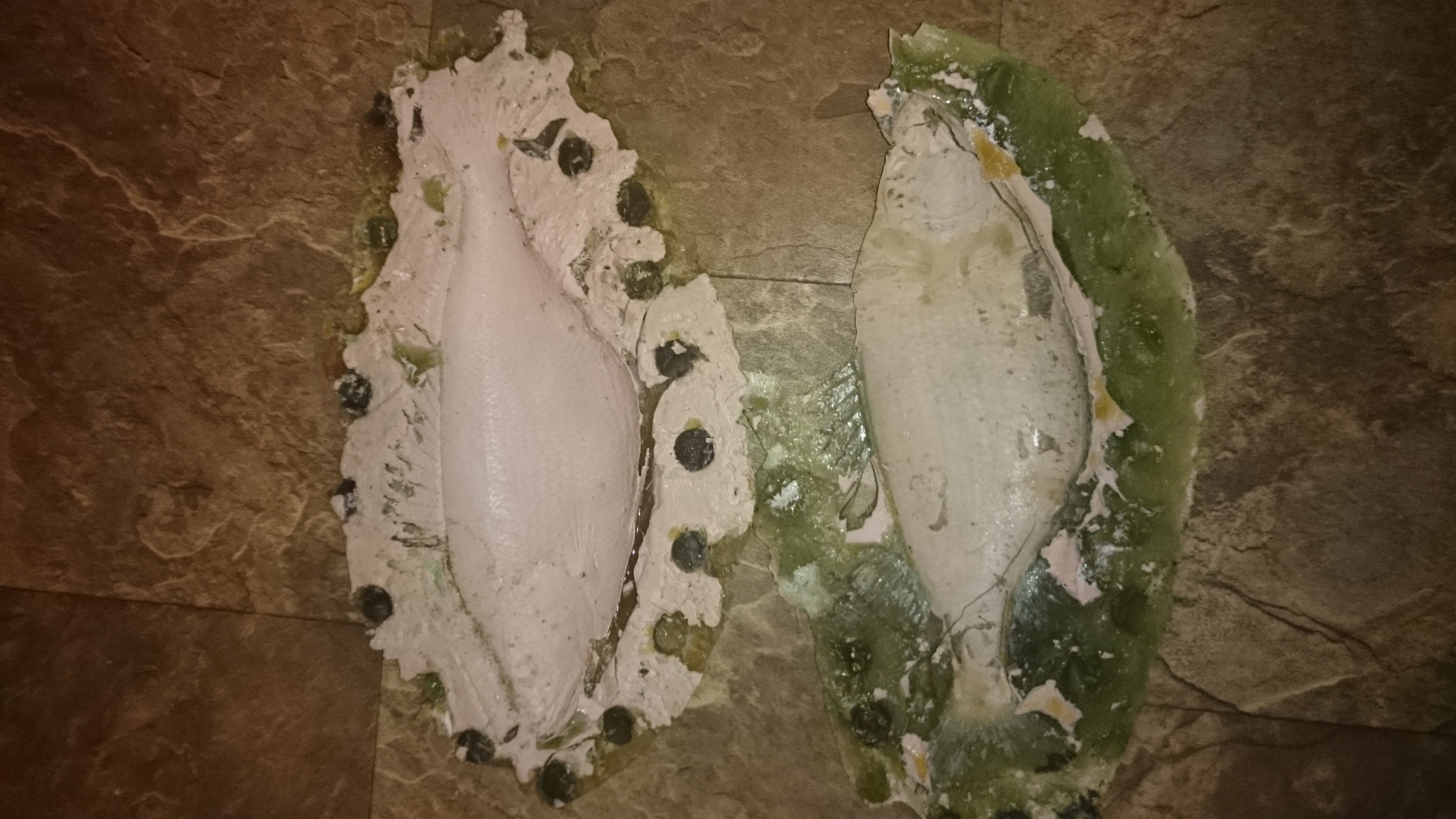
Attempt #1 was/is a semi-fail. I should have reinforced the mold a lot more with the fiber mesh. Should have used more PVA in certain areas.
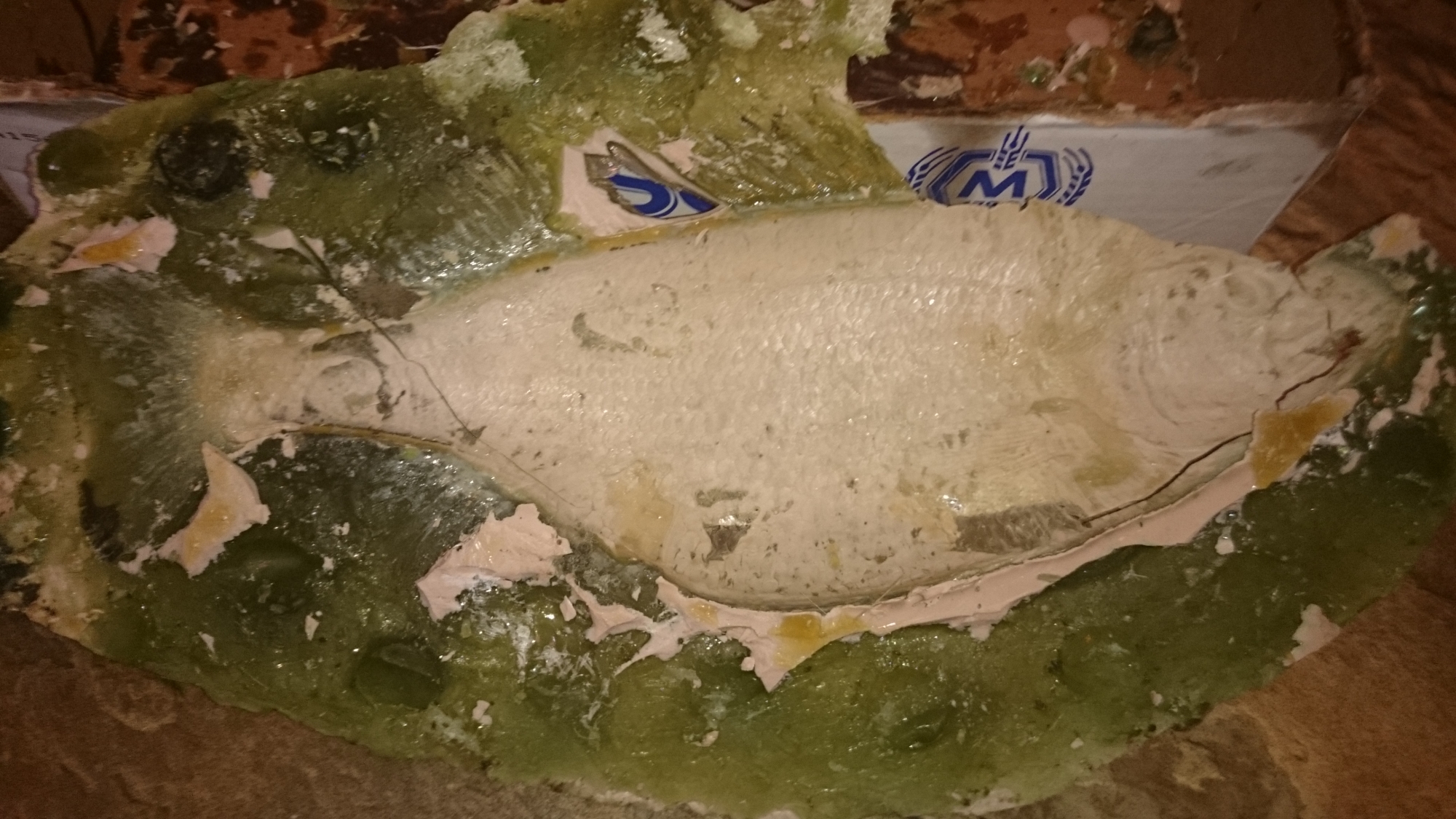
All and all, it’s about what I expected. I knew it wouldn’t be perfect and expected there to be some mistakes(actually lots). It did separate decently. The part where it stuck the most was under the belly of the fish which caused lots of cracking when I pried it apart. I definitely won’t be using it to make any reproduction casts to work on. Lol.
I’m not upset, nor going to let it bring me down or keep me from giving it another go. It is indeed a learning experience.
I think next time I will brush on a layer of epoxy over the fins as soon as I get home with the fish to keep the skin from going soft between the bones. I did pull off quite a bit when removing it from the mold.
Also, I feel like I should have frozen the fish as soon as I came home with it. It seems to be getting really soft in the areas where the fins meet the body.
I think I need some fresh PVA. The stuff I have is probably about half as old as I am. It’s gelled a little. Unless it’s supposed to be that way?
On the plus side I’m pretty dead set on making this a rewarding hobby and have ordered two airbrush guns and a compressor. The guns are here now and the compressor should be here by tonight.
I’m just hoping that the fish is not too far gone to be skinned and mounted.
I’m going to be looking into the two-part Styrofoam as you recommend, CJ Herring.
Thanks,
Kornbred
February 20, 2016
Offline
As you can see I did manage to capture the detail of the fish quite well. I’ll have to be sure to wax before adding the PVA next time. Lmao, I actually tried to do it with beeswax this time and picked up a jar of what I thought was wax, only to find out after melting and covering the mold that it was grease instead! ?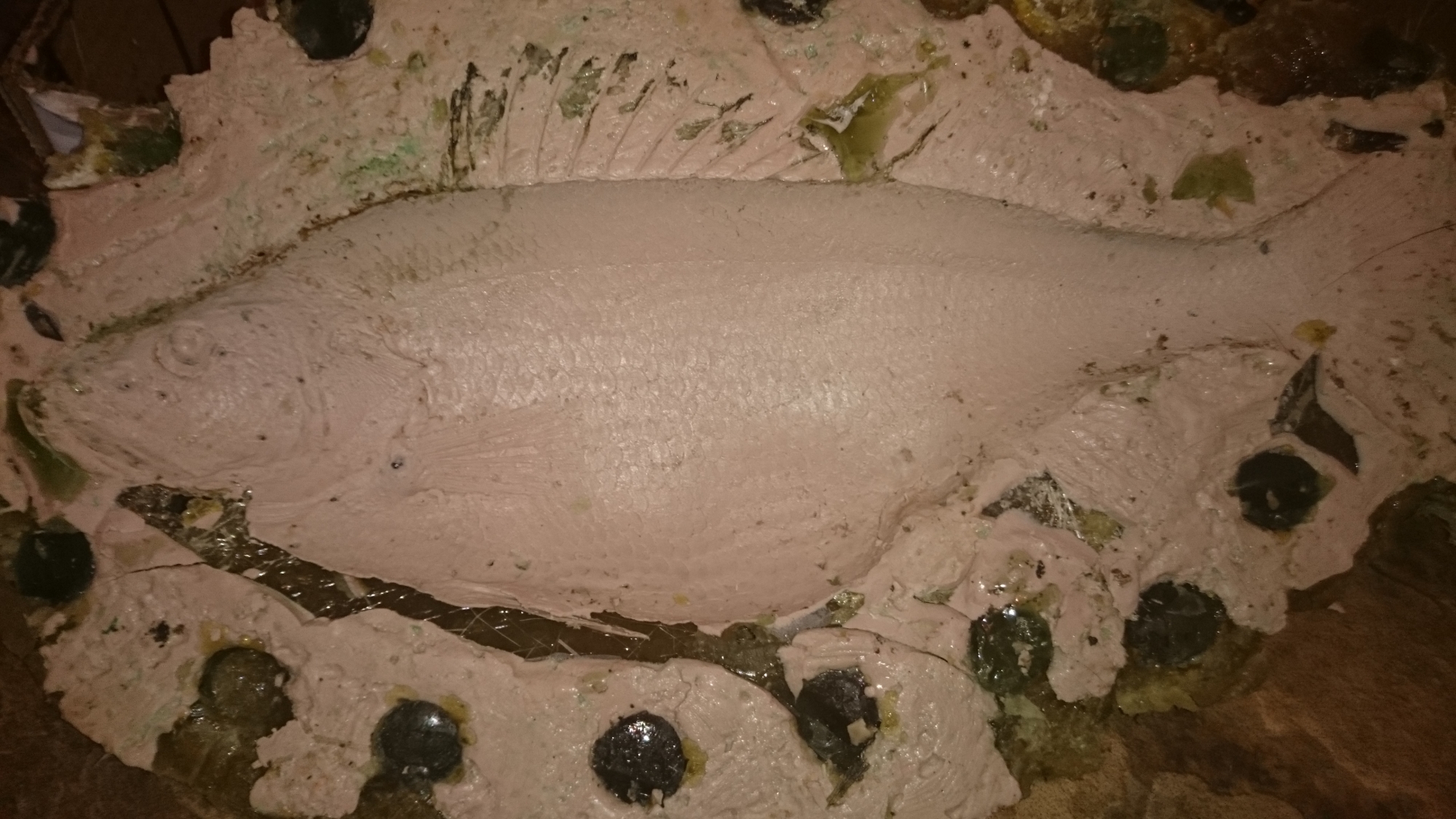
May 6, 2012
Offline
Kbread, your desire and attempt to mold is admirable! however, you have been given alot of miss information. hopefully, the following might help:
1 wash your fish in white vinegar to remove slime, and rinse well with cold water
2 Poly vinyl alcohol, PVA is not needed at all when making a mold, and serves no purpose other than to create problems in the mold making process
3 once bedded and ready to mold, dry with air, and spray both the fish and bedding material with clear gloss lacquer and let dry. this will create the moisture barrier coat needed to mold. PVA is water soluble, and will not dry correctly over anything that has moisture, and will cause problems with your resin print coat
4 Car body putty, BONDO is nothing more than poly resin with thickeners, and it’s hardener Benzoyl Peroxide, is nothing more than thickened and colored Methyl Ethyl Ketone Peroxide, MEK
5 All resins come with wax or without. understanding that, and choosing the right material is paramount to the molding and casting process
hope this helps
September 26, 2011
Offline
Not a bad first attempt kornbred ! Did you inject anything into stomach cavity of the perch before you molded it to help fill it back out. If you get an undercut it can really make it difficult to work with.
Marshy Creek knows much more about molding and casting then I do and does a better job. Take his advice.
When I use pva, I first dry the fish then dry the pva before I mold so it does not effect the molding process, but again do not take my advice, listen to Marshy Creek.
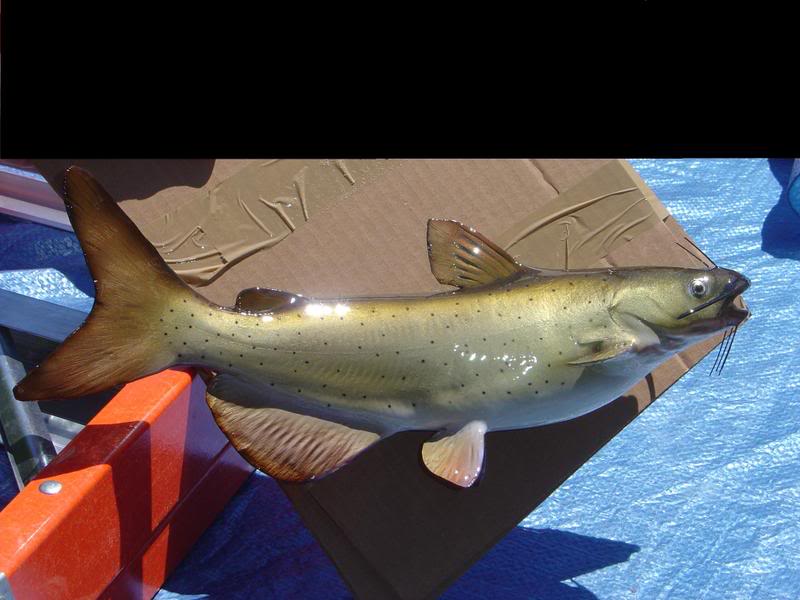
I used a method similar to what you did to mold/cast this catfish.
Taxidermy Talk Administrator
Stehling’s Taxidermy LLC http://www.stehlingstaxidermy.com
Taxidermy Insider / Learn Taxidermy Online http://www.taxidermyinsider.com
920.650.5457 a.n.stehling@gmail.com


1 Guest(s)