

 Log In


February 14, 2015
 Offline

I learned to do deer heads back in the 70’s through a mail course known as Northwestern School of Taxidermy. Later took Sam Touchstone’s course. Back then there was no internet and learning was pretty tough without someone showing you hands on how to do something. Local taxidermists weren’t interested in sharing much information understandably so. So it was trial and error for several years until my regular job consumed more time and I gave up taxidermy.
While doing deer heads over the years here and there I have always had trouble with the ears. Never a nice crisp ear. Always wanted to curl some no matter how much I tried to prevent it by carding or taping them.
Now since the internet has come along I read about all the latest techniques and even have a much better understanding of the older techniques that was difficult to understand by stick figure drawings from a book back in the 70’s. 🙂
I have been doing a lot of reading about ear liners and bondo ears on Taxidermy Net. From what I have concluded it looks like about 50/50 as to the use of ear liners or bondo ears.
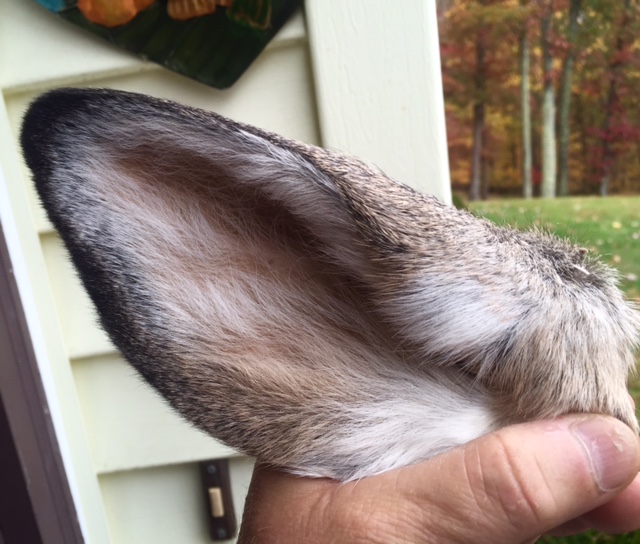
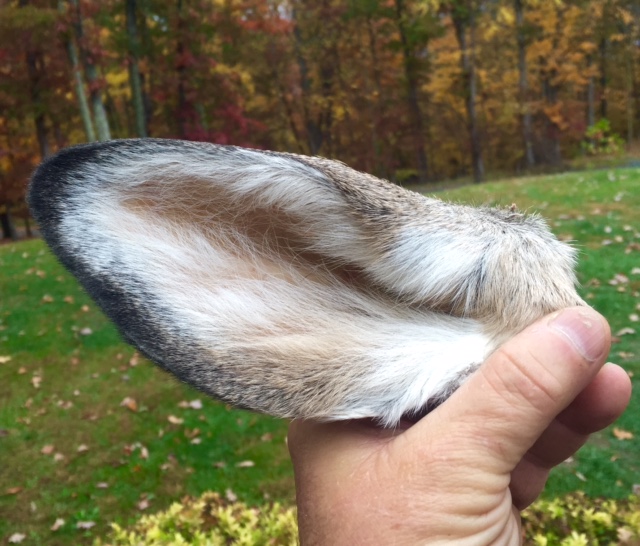
I have two nice bucks that my grandson recently killed and I do not want to have bad looking ears on them. Out of curiosity I went to the slaughter house the other day and picked up some deer ears they were going to trash. Came home, skinned them out and put the bondo to them just to see how hard it would be. As it turned out they were the nicest looking ears I have ever produced which still doesn’t mean they are all that nice from they eye of a professional taxidermist. I didn’t have an ear mold to use on them as one guy had suggested. I had to form the ear as I went until the bondo dried which took about 5 minutes to set up.
I have read a lot about thick looking ears and that sort of thing. I am not sure what is meant by that. All I know is that these ears have a much more crisp look to them then when I use the ear liners.
Then I worry about them not being as tough as a plastic ear liner in case they are bumped.
Then I read that Bondo is not an adhesive and after years the skin is going to start separating from the bondo. I can’t hardly believe this one because after the skin has dried I can’t imagine it moving since I use dry preservative. Any skin I have ever used dry preservative on dries like cement and there is no chance of it ever moving.
My questions would be:
How do these ears look to someone who knows what a nice ear should look like.
Would they hold up for years to come.
Advantages and disadvantages of ear liners and bondo ears.
Maybe it is important to know that the cartilage was left in the ear and dry preservative was used. I had absolutely no problem with what I think they call drumming where the front side of the ear does not want to lay flat against the front of the ear liner. I had serious problems with this issue when I use the ear liners. Back in the day the recommended solution was to staple the front of the ear to the earl liner which caused additional problems of staple holes. 🙂
Thanks for any input. I just want to produce a nice mount for my grandson.
May 6, 2012
Offline
Gary, I can not comment at all on dry preservative since other than avian mounts, I have never used it on any thing else in almost 40 years. Seems that this topic is always one of the top discussions of taxidermists. Paint is not an adhesive but it sticks, and sticks well over a properly prepared surface. Eggs are used in many cooking recipes as a binder, or glue. Bondo is a filler, yet it sticks and holds to many surfaces, and was not developed for taxidermy, but is a must in a taxidermy shop, since it has many applications that work well in this industry. Bondo is actually nothing more than polyester resin and talc, with a few extra additives. It’s hardener is supplied in the form of Benzoyl Peroxide, yet will also kick with Methyl Ethel Ketone Peroxide or (MEK). the hardener’s are inter changeable for both straight resin and Bondo.
As per your question on ears, I can only comment as to the process I have used for years with great success. leaving the cartilage in, causes many issues that you cannot control as the mount ages. using a liner with cartilage instantly distorts the shape and sharp edge you are trying to achieve. I remove all cartilage on every species. I replace that with only “Celastic” earliners. the Celastic liners offer a great surface for adhesion. Acetone will not only thin resin and Bondo, but add extra working time if you soak the ear in it prior to applying the bondo to the ear and inserting the liner. the acetone will also allow the resin in the bondo to wick into the skin as it sets up and dries. I cannot comment as to how this would work with dry preservative. the other issue with liners and cartilage is the trapped air that inhibits the total binder of the parts. hope this helps, and feel free to PM me if you have any questions. good luck!
February 14, 2015
Offline
I sure appreciate the reply. I believe my major problem with ear liners is that I was taught to leave the cartilage in which is obviously not the correct thing to do.
I will go back and get some more experimental ears from the slaughter house and see if I am able to remove the cartilage from the ear. It doesn’t look that hard from the videos I have watched but they have always removed it after it came back from the tannery. I have a feeling it is going to be much more difficult removing it if the skin hasn’t been tanned but I am going to give it a good try.
If I understand your post correctly you still use bondo to adhere to the ear liner?
I have never sent a hide off to be tanned. I have heard horror stories about hides coming back from the tannery missing ears or feet or the hair had slipped leaving a big bald spot on the hide. I figured I was not knowledgeable enough to fix a problem like that so I just stuck with the dry preservative. lol
I have my son’s first deer head still hanging on the wall that I used touchstone’s bess maid preservative on. The hair and hide looks as good today as it did 27 years ago. Of course the ears like crap. 🙂
Thanks again for your reply and suggestions. It is back to the slaughter house for me tomorrow.