
Off-Season Shop Projects That Improve Quality and Efficiency
Reorganization, Maintenance, and System Upgrades for Taxidermists
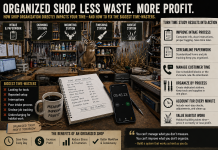
The off-season is when a taxidermy shop either gets ahead—or falls further behind. When intake volume slows, experienced taxidermists use that time to tighten systems, address bottlenecks, and fix problems that are impossible to deal with during peak season.
This article outlines high-impact off-season projects that directly improve workflow, consistency, and long-term shop performance.
Reevaluate Workflow and Shop Layout
Peak season hides inefficiencies. The off-season exposes them.
Key areas to review:
-
How specimens move from intake to prep to mounting
-
Whether “wet” and “dry” work zones are truly separated
-
Tool access and bench congestion during high-volume weeks
Walk through a full mount step-by-step and note every unnecessary movement or delay. Small layout changes compound into major time savings.
Reset Tool Organization and Bench Systems
Disorganized benches create errors and fatigue.
Off-season is ideal for:
-
Rebuilding bench layouts around task frequency
-
Standardizing tool placement across workstations
-
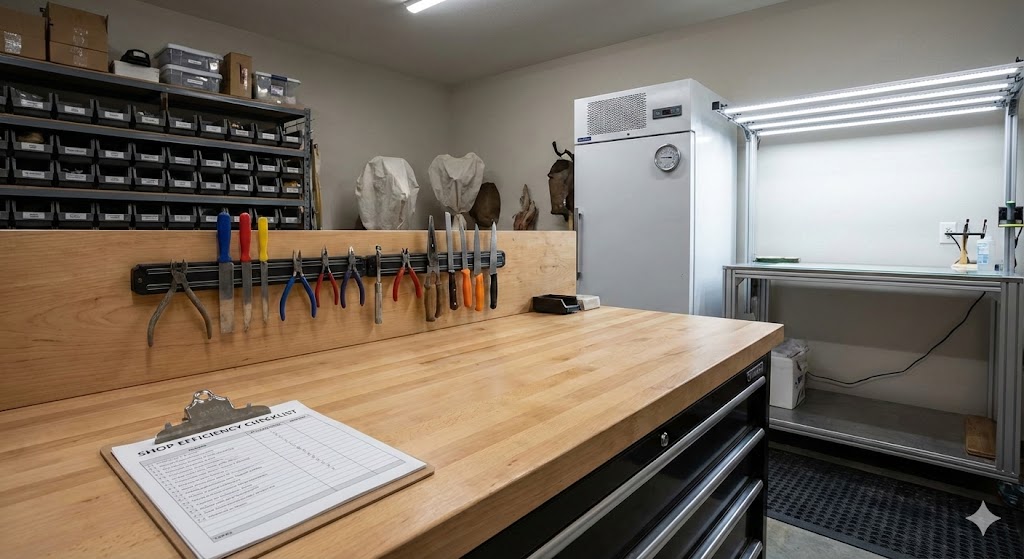
Replacing worn magnetic strips, racks, and drawer inserts
If you have help in the shop, consistency matters. Tools should live in the same place at every bench.
Deep Clean and Sanitation Audit
Surface cleaning isn’t enough.
Use the off-season to:
-
Strip benches and shelving down completely
-
Clean drains, floor edges, and hard-to-reach areas
-
Inspect for moisture intrusion and pest activity
This is also the best time to evaluate whether your sanitation setup actually supports the volume you run during season.
Equipment Maintenance and Replacement Planning
Tools don’t fail conveniently.
Off-season maintenance should include:
-
Full service on compressors and air systems
-
Airbrush teardown and seal replacement
-
Regrinding knives and evaluating blade inventory
-
Inspecting mounting stands and drying racks
Anything questionable should be repaired or replaced now—not in November.
Freezer Systems and Inventory Control
Freezers are one of the most common failure points in busy shops.
Off-season projects should include:
-
Defrosting and cleaning all units
-
Verifying temperature consistency and alarms
-
Implementing or updating FIFO inventory systems
-
Labeling freezers by species or project stage
Lost or damaged inventory costs far more than time spent improving systems.
Lighting, Ventilation, and Ergonomic Upgrades
If something caused strain or frustration during season, fix it now.
Common upgrades:
-
Adding CRI 90+ lighting to finishing areas
-
Repositioning task lights to reduce shadowing
-
Improving airflow in chemical and paint zones
-
Adjusting bench heights or adding anti-fatigue flooring
Your body and accuracy both benefit from these changes.
Process Documentation and Quality Control
If your shop relies on memory, you’re vulnerable.
Off-season is the time to:
-
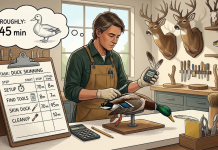
Document intake, prep, and finishing checklists
-
Standardize drying times and inspection points
-
Create quality-control steps before final completion
Written systems reduce mistakes and make scaling or training possible.
Prepare for Volume, Not Average Weeks
Many shops fail because systems only support “normal” weeks.
Ask yourself:
-
Can freezer space handle peak intake?
-
Are drying racks sufficient during season?
-
Do tool and supply inventories match real usage?
Build systems for worst-case volume, not best-case scenarios.
Final Thoughts
The off-season isn’t downtime—it’s leverage. Shops that invest in systems during slow months produce better work, reduce stress, and move through peak season with control instead of chaos.
Quality taxidermy is built long before the first cape of the season hits the table.