
Should You Cap Intake? When Saying No Protects Your Business
Every fall, taxidermists take in more work than they can finish, telling themselves they’ll catch up in January. Most never do. A cap on intake isn’t turning business away. It’s how you protect the business you already have.
The Backlog Trap
It starts with good intentions. The phone rings, a hunter drives two hours with a cape in his cooler, and you can’t bring yourself to say no. So you say yes, again and again, until the freezer’s full, the tagging table is buried, and your turnaround time has quietly gone from nine months to eighteen.
Here’s what that backlog costs you:
- Cash flow. Deposits come in fast in October, and the balance doesn’t come in until the mount goes out the door. A giant backlog means you’re living on money for work you haven’t done yet.
- Reputation. Nobody leaves a review saying “great mount, only took two years.” Long waits turn happy customers into impatient ones and impatient ones into complaints.
- Quality. When you’re behind, you rush. When you rush, the work suffers, and your work is your advertising.
- You. Burnout in this trade is real. A shop that runs on 70-hour weeks all winter isn’t a business. It’s a treadmill.
“A yes you can’t deliver on is worse than a no you explain up front.”
Know Your Real Capacity
You can’t set a cap without knowing your numbers. If you’ve been doing time studies (and you should be), you already have a head start.
Figure out three things:
- How many hours you actually spend at the bench each week. Count only productive hours. Phone calls, drop-offs, and supply runs don’t count.
- How long each type of mount really takes you. A shoulder mount, a lifesize bobcat, and a turkey on a panel all eat different amounts of time.
- Your target turnaround. Pick the number you’d be proud to quote, not the one you’ve been stuck with.
With those three numbers, the math is simple. If you have 1,200 bench hours a year and a shoulder mount takes you 10 hours start to finish, you can realistically complete about 120 of them. Anything past that isn’t extra income. It’s next year’s problem.
Ways to Cap Intake (Without Losing Your Customers)
A cap doesn’t have to be a hard “we’re full” sign on the door. There are several ways to do it:
The hard cap. You take a set number of each species per season, first come, first served. It’s the simplest system and the easiest to explain, and it creates real urgency for customers to book early.
The reservation list. Your repeat customers reserve spots before the season opens, usually with a deposit. It rewards loyalty and gives you a clear picture of your fall before the first deer comes through the door.
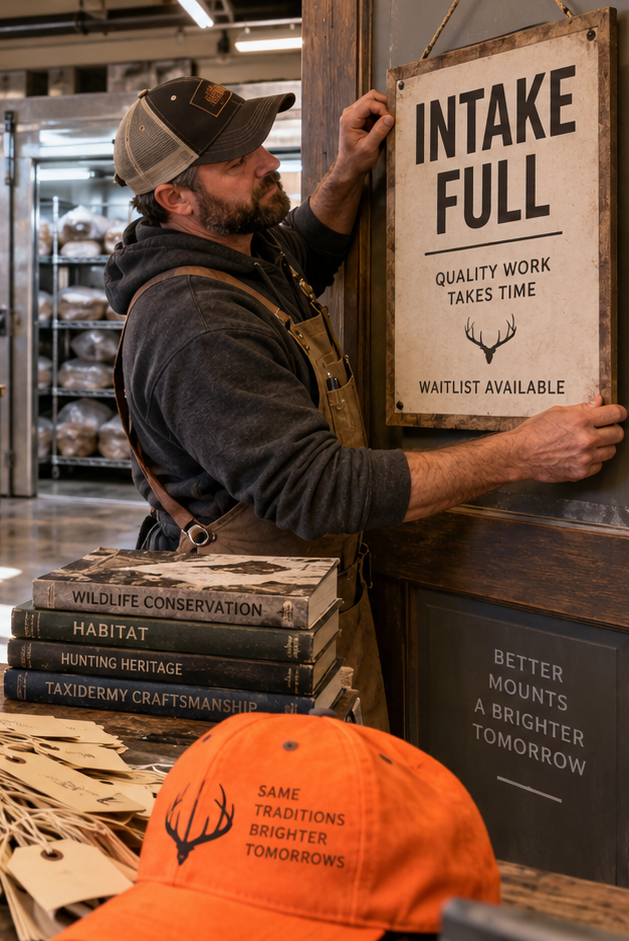
The waitlist or referral. Once you’re full, you keep a short waitlist for cancellations, or refer customers to a taxidermist you trust. Referring work out feels wrong at first, but that shop will often return the favor, and the hunter remembers you were honest.
The price lever. If demand consistently outruns your capacity, that’s the market telling you something. Raising prices naturally trims intake while keeping your income steady or better. (See our article on how to raise your prices without losing customers.)
The species or specialty cap. Maybe you’ll take all the whitetail you can handle but only a handful of lifesize mounts or fish. Cap the work that eats the most time for the least return.
How to Say No
The hard part isn’t the math. It’s the conversation. Here’s how to make it easier:
- Announce it before the season. Post it on your website, social media, and your pre-season email. When customers know the rules ahead of time, a “we’re full” doesn’t feel personal.
- Frame it around quality. “I limit how many mounts I take so every one gets the time it deserves” is a selling point, not an apology.
- Have a next step ready. A waitlist, a referral, or next season’s reservation list means you never leave a customer with nothing.
- Hold the line. The first time you make an exception for “just one more,” the cap stops meaning anything. Be kind, be clear, and be consistent.
The Customers You Keep
Here’s what shops that cap intake tend to find: their customers respect them more. Scarcity signals quality. Shorter turnaround means happier customers and better reviews. And the shop owner gets something the backlog took from them: control over their own time.
You don’t have to take every animal that comes through the door. You have to do great work on the ones you accept, deliver them when you said you would, and build a business that’s still standing in ten years.
Saying no isn’t the opposite of good customer service. Sometimes it is good customer service.
Quick takeaways
- Know your real capacity in bench hours, not hopes.
- Choose a cap system that fits your shop: hard cap, reservations, species limits, or pricing.
- Announce your cap before the season, not in the middle of it.
- A clear no protects your reputation, your cash flow, and your sanity.