
Setting Up a Safe and Efficient Taxidermy Workbench
Tools, Lighting, Ergonomics, and Materials
A taxidermy workbench is more than just a table—it’s the center of nearly every critical task in the shop. From delicate facial work to heavy form mounting, a properly designed workbench improves accuracy, reduces fatigue, and helps prevent costly mistakes and injuries.
This guide covers how to set up a taxidermy workbench that is safe, efficient, and built for long-term professional use, focusing on tools, lighting, ergonomics, and materials.
Why Your Workbench Setup Matters
An inefficient bench leads to:
-
Poor posture and physical strain
-
Slower workflow and repeated interruptions
-
Increased risk of cuts, slips, and chemical exposure
-
Inconsistent detail work
A well-designed bench allows you to focus on craftsmanship instead of fighting your setup.
Workbench Height and Ergonomics
Bench Height
Workbench height should match the type of work being done.
-
General mounting and prep: Bench height should allow your forearms to rest naturally at about a 90-degree angle.
-
Detail and facial work: Slightly higher benches reduce neck and back strain.
-
Heavy work: Lower benches provide better leverage and stability.
If possible, adjustable-height benches or platforms offer the most flexibility.
Standing vs Sitting
Taxidermy involves long hours, so build your bench to support both.
-
Use anti-fatigue floor mats for standing work
-
Keep a rolling stool nearby for detailed tasks
-
Avoid locking yourself into one posture for extended periods
Comfort directly affects precision.
Work Surface Materials
Your bench surface must be durable, sanitary, and easy to maintain.
Recommended Materials
-
Stainless Steel: Ideal for skinning and fleshing areas; non-porous and easy to sanitize
-
HDPE (High-Density Polyethylene): Tough, chemical-resistant, and easy to clean
-
Sealed Hardwood or Plywood: Acceptable for dry mounting areas only
Avoid porous or unfinished surfaces that absorb moisture, blood, and chemicals.
Tool Layout and Accessibility
One of the most common workbench mistakes is clutter.
Daily-Use Tools (Bench-Level Access)
Keep only essential tools on the bench:
-
Scalpels and blades
-
Fleshing knives
-
Needles and thread
-
Measuring tools
-
Pliers and cutters
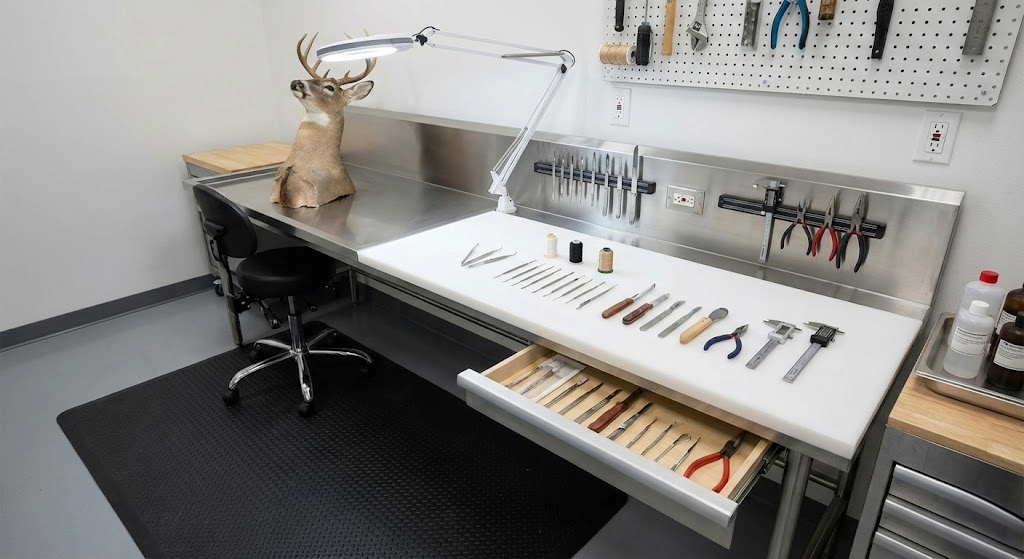
Magnetic strips, shallow drawers, or bench-mounted tool racks keep tools visible and within reach without taking up workspace.
Secondary Tools
Occasional-use tools should be close but not on the bench—pegboards, wall racks, or nearby cabinets work well.
A clean bench surface equals better focus and fewer accidents.
Lighting for Precision Work
Lighting is one of the most overlooked elements of a taxidermy workbench.
Overhead Lighting
Use bright, even overhead lighting to eliminate shadows across the entire bench.
Task Lighting
Install adjustable LED task lights directly over:
-
Facial detail areas
-
Eye and ear work
-
Grooming and finishing stages
Look for lights with:
-
CRI 90+ for accurate color representation
-
Adjustable arms for directional control
Poor lighting causes eye strain and color errors that often aren’t noticed until the mount leaves the shop.
Electrical and Tool Safety
Power Access
-
Install GFCI outlets near wet areas
-
Keep cords routed off the floor
-
Avoid extension cords as permanent solutions
Sharp Tool Safety
-
Store blades in magnetic holders or blade cases
-
Dispose of used blades in a dedicated sharps container
-
Never leave cutting tools buried under materials
A clean, organized bench is a safer bench.
Chemical Awareness at the Bench
Even at mounting benches, chemical exposure can occur.
-
Keep adhesives, solvents, and paints capped when not in use
-
Use secondary trays to catch spills
-
Ensure ventilation pulls fumes away from your breathing zone
Never allow chemicals to accumulate on work surfaces.
Workflow Efficiency at the Bench
Your bench should support the natural sequence of your work.
-
Prep → mount → detail → clean
-
Avoid backtracking or moving materials unnecessarily
-
Reset the bench between mounts to maintain consistency
A simple bench reset between projects reduces mistakes and speeds up future work.
Final Thoughts
A safe and efficient taxidermy workbench doesn’t require expensive equipment—it requires thoughtful design. Proper height, durable surfaces, organized tools, and quality lighting all work together to support precision, safety, and long-term comfort.
When your workbench is set up correctly, your craftsmanship shows in every finished mount.