

Home Blog Page 2

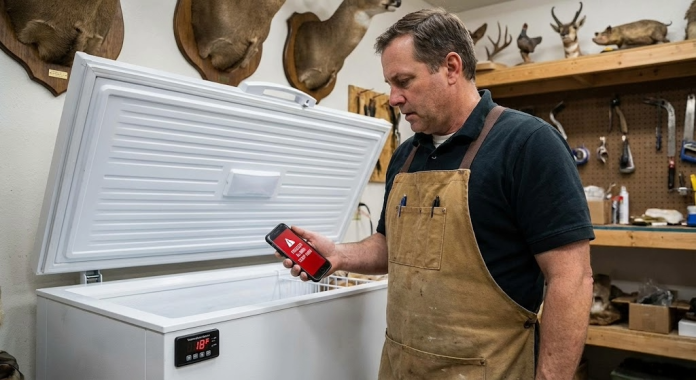
The Importance of Freezer Alarms in a Taxidermy Shop

0
The Importance of Freezer Alarms in a Taxidermy Shop

The Importance of Freezer Alarms in a Taxidermy Shop

Why Freezer Monitoring Matters in Taxidermy

In a taxidermy shop, freezers don’t just store food — they protect irreplaceable memories.

Each cape, hide, bird, or shoulder mount represents:

  • A once-in-a-lifetime hunt

  • A client’s investment

  • Your shop’s reputation

  • Weeks or months of work

A single overnight freezer failure can mean:

  • Bacterial spoilage

  • Hair slippage

  • Cape degradation

  • Loss of customer trust

  • Thousands of dollars in liability

Unlike restaurants that may lose inventory, taxidermists risk losing irreplaceable trophies.

That’s why freezer alarms aren’t optional — they’re essential risk management.


Types of Freezer Alarms for Taxidermy Shops

There are several levels of freezer monitoring systems, ranging from simple audible alarms to full remote monitoring with data logging.


1. Built-In Audible Temperature Alarms

What they are:
Many commercial chest and upright freezers come with factory-installed high-temperature alarms.

How they work:

  • Trigger when internal temperature rises above a preset threshold

  • Emit an audible beep or tone

Pros:

  • Inexpensive

  • No installation required

  • Immediate on-site alert

Cons:

  • Only helpful if someone is physically present

  • No remote notification

  • No historical data tracking

Best for: Small shops with daily on-site presence — but not sufficient alone for overnight protection.


2. Plug-In Power Failure Alarms

What they are:
Devices that plug into an outlet and alert you when power is lost.

How they work:

  • Sound an alarm if electrical current stops

  • Some models use battery backup

Pros:

  • Affordable

  • Easy setup

  • Protects against breaker trips or outages

Cons:

  • Only detects power loss (not compressor failure)

  • Usually local alarm only

  • No temperature monitoring

Important note:
A freezer can fail mechanically while still receiving power. Power alarms alone are not enough protection.


3. Wireless Temperature Alarm Systems

What they are:
Independent temperature sensors placed inside the freezer that transmit data wirelessly.

How they work:

  • Sensor monitors internal temperature continuously

  • Sends alerts via:

    • Smartphone app

    • Text message

    • Email

    • Push notification

Pros:

  • Remote monitoring

  • Custom temperature thresholds

  • Battery backup options

  • Affordable compared to commercial systems

Cons:

  • Consumer-grade systems may lack industrial durability

  • Wi-Fi dependent unless cellular backup is included

Best for:
Most small-to-mid-sized taxidermy shops looking for reliable overnight protection.


4. Cellular-Based Monitoring Systems

What they are:
Standalone monitoring systems using cellular networks instead of Wi-Fi.

How they work:

  • Temperature sensor connects via cellular signal

  • Sends real-time alerts even if Wi-Fi fails

Pros:

  • Works during internet outages

  • More reliable in rural areas

  • True 24/7 monitoring

  • Often includes data logging

Cons:

  • Monthly subscription cost

  • Higher upfront cost

Ideal for:
Rural taxidermy shops or businesses storing high-value inventory.


5. Commercial Environmental Monitoring Systems

What they are:
Professional-grade monitoring systems used in labs, medical facilities, and food storage.

Features may include:

  • Multiple freezer monitoring

  • Data logging & compliance reports

  • Alarm escalation (call → text → email)

  • Backup battery systems

  • Power failure detection

  • Cloud dashboards

Pros:

  • Highest reliability

  • Documented temperature history

  • Insurance and liability documentation

  • Multi-location monitoring

Cons:

  • Higher cost

  • Installation/setup required

Best for:
High-volume taxidermy studios storing dozens of capes or long-term specimen storage.


6. Smart Plugs with Temperature Sensors

What they are:
Smart outlets paired with external temperature probes.

Pros:

  • Budget-friendly

  • Basic remote notification

Cons:

  • Often not rated for freezer-level cold internally

  • Less reliable long-term

  • Not purpose-built for critical storage

These should be considered a secondary safeguard, not primary protection.


Key Features to Look for in a Taxidermy Freezer Alarm

When choosing a system, taxidermists should prioritize:

1. Low-Temperature Capability

Must accurately monitor below 0°F.

2. Remote Alerts

Text message or phone notification is essential.

3. Battery Backup

Freezers fail during storms — so does power.

4. Power + Temperature Monitoring

You need both.

5. Data Logging

Useful for:

  • Insurance claims

  • Customer disputes

  • Quality control


Real Risks in a Taxidermy Shop

Freezers fail due to:

  • Compressor burnout

  • Door left cracked

  • Overloading

  • Power surges

  • Breaker trips

  • Storm outages

  • Extension cord failure

And spoilage can begin in hours — especially with thick capes.

Hair slip is irreversible.


The Financial Reality

Consider:

  • Average shoulder mount cape value: $500–$1,500+

  • Full body mounts: several thousand dollars

  • 20 capes in a freezer = $20,000+ in exposure

A quality alarm system may cost:

  • $50–$300 for basic systems

  • $300–$1,000+ for commercial systems

  • $10–$40/month for cellular plans

Compared to one freezer loss — it’s minimal.


Risk Management & Reputation

In taxidermy, reputation is everything.

A freezer failure can mean:

  • Refunds

  • Replacement hunts (if possible)

  • Insurance claims

  • Online reputation damage

  • Loss of referrals

An alarm system is not just equipment — it’s business protection.


Conclusion

In a taxidermy shop, a freezer alarm is not a luxury. It is:

  • Inventory protection

  • Client protection

  • Reputation protection

  • Financial protection

Whether you choose a basic wireless system or a full commercial monitoring solution, the key is simple:

If you’re not alerted immediately, you’re not protected.

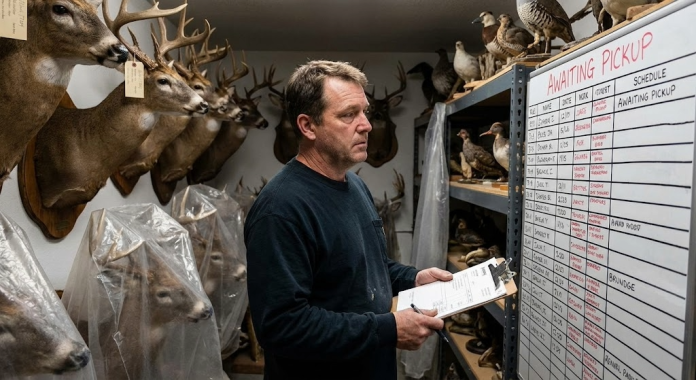
When Customers Don’t Pick Up: Protecting Your Taxidermy Shop From Completed-Mount Backlog

0
When Customers Don’t Pick Up: Protecting Your Taxidermy Shop From Completed-Mount Backlog

When Customers Don’t Pick Up: Protecting Your Taxidermy Shop From Completed-Mount Backlog

A Follow-Up to Building a Successful Taxidermy Workflow

Every taxidermist eventually runs into the same frustrating problem:

The mount is finished.
The customer is happy.
And then… they disappear.

No pickup. No payment. No return calls.

For a taxidermy shop,  this is more than an inconvenience — it becomes a serious production and financial issue. Finished mounts take up space, prevent workflow from moving forward, and delay income that you’re counting on.

If this becomes common, your entire shop can get trapped in a cycle where you’re forced to mount and finish twice as much work just to collect the same amount of money.

This article covers how to try to prevent pickup problems, how to create urgency, and how to build a system that protects your time, space, and cash flow.


The Hidden Cost of “No Pickups”

When a customer doesn’t pick up their finished mount, the shop loses in multiple ways:

  • You lose the final payment

  • You lose storage space

  • You lose workflow efficiency

  • You lose time responding to repeated messages

  • You lose the ability to complete and deliver other mounts

  • Your stress levels increase

Most importantly, you lose momentum.

A shop that is full of completed mounts starts to feel stuck. You can’t move forward because your shop is physically clogged with finished work, and your cash flow begins to depend on chasing customers instead of producing.

No pickups create a dangerous trap:
your shop becomes a storage unit instead of a production shop.


The “Double Work” Problem

Many taxidermists unknowingly fall into this cycle:

They finish ten mounts.
Only five customers pay and pick up.
The other five sit.

So the taxidermist has to finish another ten mounts just to bring in enough cash to cover bills.

The shop becomes a hamster wheel — constant production, but inconsistent payment.

This is where taxidermists start burning out, not because they can’t do the work, but because the workflow stops producing predictable income.


The Most Effective Strategy: Tell Customers Before You Mount

One of the best ways to prevent pickup delays is to create customer involvement before the mount is finished.

Instead of surprising them with a finished product, notify them when their mount enters key stages:

  • “Your deer is on the schedule for mounting next week.”

  • “We’ll be finishing and painting your bird this week.”

  • “Your mount is in final stages and will be completed soon.”

This accomplishes two things:

1. It Creates Anticipation

Customers begin mentally preparing.

2. It Creates Financial Readiness

They realize they’ll need to pay soon and begin budgeting.

Most pickup issues aren’t because customers are unhappy — it’s because they weren’t prepared for the timing of the final bill.

A simple heads-up reduces delays dramatically.


Pickup Problems Often Come From One Thing: Surprise

Customers may drop off an animal and hear “8–12 months.”

But when 10 months passes quietly, they stop thinking about it.

Then suddenly they get a call:
“Your mount is done. You owe $850.”

That feels like an unexpected expense, even if they agreed to it.

Good workflow includes customer communication that keeps the mount in their mind.


Should You Send Finished Photos? Pros and Cons

Sending finished pictures is one of the most debated topics in the taxidermy business.

It can be a powerful tool — but it can also backfire.

The Benefits of Sending Finished Photos

Sending completion photos can:

  • Build excitement

  • Confirm customer satisfaction

  • Reduce disputes

  • Create a record of quality at delivery

  • Help you catch last-minute adjustments early

It also reassures the customer that the job is complete and professional.

In many cases, it makes pickup faster because they’re impressed and eager.


The Danger of Sending Finished Photos

However, there is a real downside:

Once a customer sees the finished product, some of the urgency disappears.

The “wow moment” is partially spent. The emotional excitement they would have felt walking into your shop is now reduced.

For certain customers, the photo becomes enough. They think:

“Awesome. Looks great. I’ll grab it sometime.”

And “sometime” turns into months.

Finished photos can unintentionally reduce urgency if you don’t pair them with clear pickup expectations.


The Right Way to Send Finished Photos

If you choose to send finished photos, it should be paired with a strong pickup message.

Instead of:

“Your mount is finished!”

Say:

“Your mount is finished and ready for pickup. Total balance due is $____. Please schedule pickup within the next 7 days.”

This keeps the photo from becoming entertainment and reinforces that completion means it’s time to close the job.


Reminder Texts, Calls, and the Importance of a Paper Trail

No matter how good your workflow is, you will still have customers who delay.

The key is to stay professional, consistent, and documented.

A good system includes:

  • A completion message

  • A reminder after 7 days

  • A reminder after 14 days

  • A billing notice after 30 days

All communication should be saved.

Texts and emails create a paper trail that protects your shop if disputes arise.

If the situation ever becomes legal or requires a collections process, documentation is your strongest defense.


Storage Policies: The Most Important Tool You Have

A storage policy is not “being mean.”

It is a business necessity.

Every finished mount sitting in your shop costs you:

  • Space

  • insurance risk

  • damage risk

  • time moving it around

  • lost production capacity

If your shop is full of completed mounts, you cannot operate efficiently.

Many shops adopt a policy such as:

  • 30 days free storage after completion

  • storage fee begins after 30 days

  • mounts may be sold or disposed of after a defined period (where legal)

Even if you never enforce the final step, simply having the policy prevents most issues.

The goal is not punishment — it’s urgency.


Creating Urgency Without Damaging Customer Relationships

The best pickup systems feel professional, not aggressive.

A good pickup message should sound like:

  • “We want to make sure your mount stays safe.”

  • “We have limited space for completed mounts.”

  • “Our shop schedule depends on completed work being picked up.”

When customers understand that your shop is a production business — not a warehouse — they are more likely to respect your time.


Don’t Be Afraid to Require Final Payment Before Pickup Scheduling

One of the strongest strategies many shops use is:

“Final payment required before scheduling pickup.”

This eliminates wasted time coordinating pickups that never happen.

It also removes the uncomfortable moment where the customer sees the mount, becomes emotional, and tries to negotiate pricing.

The mount is complete. The balance is due. Business stays clean.


The Hard Truth: Pickup Delays Hurt the Taxidermist More Than the Customer

The customer can delay pickup with no real consequences.

But the taxidermist pays the price every day that mount sits there.

This is why taxidermists must treat pickup policies as part of workflow, not as an afterthought.

A strong workflow doesn’t end at finishing.

It ends when the mount leaves the building.


Final Thoughts: A Finished Mount Isn’t Finished Until It’s Gone

The difference between a thriving shop and a stressed shop is often not production skill.

It’s follow-through.

When customers don’t pick up, it forces the taxidermist into a dangerous production cycle: working harder, storing more, and collecting less.

But with the right communication system, clear policies, and consistent reminders, most pickup issues can be prevented.

Your shop should not be a storage unit.

Your workflow should produce:

  • completed mounts

  • completed payments

  • and completed deliveries

Because in the end, the mount isn’t truly finished until it’s out the door.

Building a Successful Workflow in Your Taxidermy Shop Part 1

0

Building a Successful Workflow in Your Taxidermy Shop Part 1

Systems for the One-Person Operation

Most taxidermy shops are one-person operations.

That means you’re not just the taxidermist — you’re also the sales department, production manager, customer service rep, bookkeeper, and shipping coordinator. When you wear every hat, workflow isn’t optional. It’s survival.

Talent will get customers in the door.
Systems are what keep your shop profitable, predictable, and sustainable.

Let’s walk through the full workflow of a modern taxidermy shop — from intake to delivery — and explore how batching, pricing, and production planning affect both efficiency and cash flow.


Workflow Starts at Intake — Not at the Fleshing Wheel

Your production system begins the moment a customer walks through the door.

A clean intake process prevents mistakes, protects margins, and reduces stress months later when that mount is on your stand.

A professional intake system should include:

  • A detailed written work order (species, pose, base selection, special requests)

  • Clear, documented pricing

  • A deposit policy (50% minimum is common and wise)

  • Durable tagging with a unique ID number

  • Photo documentation at drop-off

  • Clear timeline expectations

Sloppy intake leads to sloppy production.
Miscommunication at the front end turns into remakes, discounts, and uncomfortable phone calls at the back end.

The more structured your intake system, the smoother your workflow becomes downstream.


Fleshing In-House vs. Subbing Out: A Strategic Decision

Few decisions impact workflow more than how you handle fleshing and prep work.

Keeping It In-House

Advantages:

  • Full quality control

  • Lower long-term per-piece cost

  • Immediate turnaround when needed

Challenges:

  • Equipment investment

  • Space and cleanliness management

  • Significant time commitment

Subbing It Out

Advantages:

  • Frees up production time

  • Cleaner, simpler shop flow

  • Allows focus on mounting and finishing

Challenges:

  • Higher per-piece cost

  • Dependence on outside schedules

  • Less control over shaving quality

The real question isn’t cost per cape — it’s value of your time.

If you can mount a deer in 6–8 hours and generate $900–$1,200 in revenue, but you spend those same hours fleshing to “save” $100, you may be trading high-value hours for low-value ones.

As a one-person shop, your time is your most limited resource. Allocate it carefully.


Designing a Physical Production Flow

Even a small shop benefits from defined production zones.

The ideal workflow moves in one direction:

Intake → Freezer → Fleshing → Tanning → Mounting → Drying → Finishing → Delivery

When mounts move backward or cross paths repeatedly, inefficiency creeps in.

Define clear areas for:

  • Wet work

  • Mounting

  • Drying

  • Finishing and painting

  • Ready-for-pickup storage

Reducing physical movement reduces mental fatigue. When your space flows, your production follows.


How Many Mounts Should You Complete Each Week?

Many taxidermists operate reactively — mounting when they feel motivated and finishing when they feel pressured.

A better approach is simple math.

Step 1: Determine Your Annual Revenue Goal

Example: $150,000 gross production.

Step 2: Determine Your Average Ticket

Example: $900 per mount.

Step 3: Calculate Required Volume

$150,000 ÷ $900 = 167 mounts per year.

Step 4: Break It Down Weekly

167 mounts ÷ 48 working weeks ≈ 3–4 mounts per week.

That means you must consistently start or finish three to four mounts every week to hit that revenue target.

Consistency is more important than intensity.


Cash Flow: Spikes vs. Steady Income

How you structure production directly affects your cash flow rhythm.

Batch Completion

Finishing 15–20 mounts at once creates large cash influxes. This can feel productive — and it is — but it also creates long stretches with little incoming revenue.

Rolling Completion

Finishing 3–4 mounts weekly creates predictable income and smoother financial planning.

Neither method is wrong. They simply create different financial patterns.

Many successful shops use a hybrid system:

  • Batch similar mounts for efficiency.

  • Release finished work in controlled waves for steady income.


The Power of Batching Similar Species

Switching species costs time.

Going from deer to turkey to fish and back to deer creates constant setup changes — different tools, paint systems, forms, and mental processes.

Instead, consider themed production blocks:

  • “Deer Weeks”

  • “Bird Weeks”

  • Half-week batching cycles

Even grouping 5–8 similar mounts significantly increases efficiency. Less setup. More momentum. Stronger focus.

Batching doesn’t just save time — it reduces decision fatigue.


Habitat Work: Where Profit Is Won or Lost

One of the biggest workflow slowdowns happens at the finishing stage — especially with elaborate habitat work.

A simple driftwood base with cattails may take one to two hours.

An elaborate mud-and-water marsh scene can take eight or more.

The difference isn’t artistic — it’s economic.

Clients today expect higher-end habitat than ever before. Social media has elevated standards. Customers see custom scenes online and want the same.

That’s not a problem — unless you fail to price accordingly.

Smart Structure:

  • Offer a clean, attractive standard base either included in your mount price or at a set price.

  • Offer habitat upgrades with clear tiered pricing.

If a habitat scene adds eight hours, those eight hours must be built into the price. Otherwise, your effective hourly rate collapses.

High-end work is profitable — but only when priced correctly.


Managing Work in Progress (WIP)

Too many unfinished mounts create mental clutter and shop congestion.

Too few create downtime.

A practical guideline:

Keep 2–3 weeks of mounting capacity in active production.

If you mount four per week, maintain eight to twelve in progress — not forty.

Excess WIP ties up:

  • Space

  • Mental energy

  • Deposits without final payments

  • Shop clarity

Controlled production equals controlled stress.


Mounting for Efficiency vs. Mounting for Lifestyle

Ultimately, workflow decisions shape your quality of life.

Do you prefer:

  • Large financial spikes?

  • Or steady weekly income?

Do you thrive in intense production bursts?
Or do you prefer balanced weekly output?

There is no universal right answer — only intentional structure.

Many shops benefit from simple recurring systems:

  • “Finish Fridays”

  • Scheduled delivery days

  • Weekly billing routines

Structure reduces anxiety. Predictability increases profit.


Final Thoughts: Systems Create Freedom

A stressful shop and a profitable shop often look identical from the outside.

The difference isn’t talent.

It’s workflow.

When you know:

  • How many mounts must be completed weekly

  • When to batch

  • When to sub work

  • How to price habitat upgrades

  • How much work should be in progress

You regain control.

And when you control the workflow, you control your income — and your sanity.

Taxidermy Shop Safety: Protecting Yourself While Perfecting Your Craft

0
Taxidermy Shop Safety: Protecting Yourself While Perfecting Your Craft

Taxidermy Shop Safety: Protecting Yourself While Perfecting Your Craft

Taxidermy is a rewarding craft that blends artistry, biology, chemistry, and skilled workmanship. But like any hands-on trade, it comes with risks. From sharp tools and heavy mounts to chemicals and airborne particles, a taxidermy shop can quickly become hazardous if proper precautions aren’t taken.

Creating a safe work environment protects not only your health today — but also your long-term ability to stay in the profession. Below are essential safety practices every taxidermist should follow.


1. Protect Your Eyes — Always

Eye injuries are one of the most common and preventable accidents in a taxidermy shop.

Wear Eye Protection When:

  • Grinding, sanding, or using power tools

  • Loosening or cutting wire

  • Drilling into forms

  • Working around antlers or horns

  • Trimming dried hides or hardened materials

Even small fragments can cause serious damage. Flying debris from grinders or wires under tension can strike unexpectedly.

Watch for Hidden Eye Hazards:

  • Bird wire protruding from wings during drying
    Wire sticking out from wings is notorious for eye-level accidents.

    • Keep wire tips short

    • Better yet, bend the ends over so if you bump into them, they won’t puncture your eye.

bird wing wire safety

  • Antlers and horns at eye level
    It’s easy to turn around and walk straight into a rack. Elk, deer, and other large mounts often sit right at eye height.

    • Be mindful of positioning.

    • Use bright tape or padding on sharp tips when possible.

    • Pool noodles work great on elk antler tips to prevent accidental injury.

You only get one set of eyes — protect them.

elk antler tip safety


2. Hearing Protection Matters

Grinders, air tools, fleshing machines, and compressors create long-term hearing damage.

Wear:

  • Foam ear plugs

  • Over-ear hearing protection

  • Or both when working around loud equipment

Hearing loss doesn’t happen overnight — but once it’s gone, it’s permanent.


3. Wear Protective Clothing

Aprons

A durable apron protects against:

  • Blood and biological matter

  • Chemical splashes

  • Blade slips

It also keeps clothing from absorbing tanning chemicals and odors.

Gloves

Always wear gloves when handling:

  • Tanning solutions

  • Degreasers

  • Preservatives

  • Acids or solvents

You might tolerate chemicals today — but repeated exposure over time can lead to:

  • Skin sensitivity

  • Chemical burns

  • Respiratory issues

  • Long-term health complications

Many taxidermists develop reactions after years of exposure. Your body can lose its resistance over time. Protect your skin now to prevent serious problems later.


4. Ventilation Is Critical

Taxidermy shops contain fumes from:

  • Tanning agents

  • Adhesives

  • Solvents

  • Paints

  • Degreasers

Without proper airflow, these fumes accumulate and become dangerous.

Ensure your shop has:

  • Good cross-ventilation

  • Exhaust fans

  • Air filtration systems

  • Respirators when necessary

Breathing in chemical vapors daily can cause long-term respiratory damage. Fresh air is not optional — it’s essential.


5. Be Careful with Heavy Mounts

Large shoulder mounts, life-size mounts, and pedestal mounts can be heavy and unstable.

If you have a mount on a stand:

  • Always weight the opposite side of the stand.

  • Use a bag of salt or sand as a counterbalance.

  • Make sure the base is stable before stepping away.

A falling mount can cause:

  • Serious injury

  • Damaged work

  • Costly repairs

Stability is key.


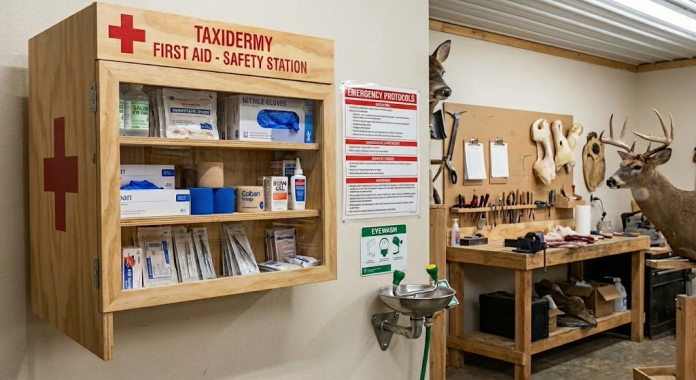
6. Keep a First Aid Kit in the Shop

Cuts and punctures happen — even to experienced professionals.

Have a stocked first aid kit that includes:

  • Bandages

  • Sterile gauze

  • Antiseptic

  • Medical tape

  • Tweezers

  • Eye wash solution

Common shop injuries include:

  • Blade cuts

  • Wire punctures

  • Antler scrapes

  • Splinters

Quick treatment reduces infection risk and downtime.


7. Maintain a Clean Shop

Cleanliness isn’t just about appearance — it’s about health.

A dirty shop encourages:

  • Bacteria growth

  • Mold formation

  • Insect infestation

  • Cross-contamination

Best practices:

  • Remove scraps and waste daily

  • Disinfect work surfaces

  • Keep floors clear and dry

  • Store chemicals properly

  • Control humidity

Mold and bacteria don’t just damage mounts — they can damage your lungs and immune system.


8. Blade and Tool Awareness

Sharp tools are part of daily work. Stay alert.

  • Always cut away from your body.

  • Replace dull blades — dull tools slip more easily.

  • Keep tools organized and off the floor.

  • Store knives safely when not in use.

Most shop injuries happen when rushing or working tired.


9. Think Long-Term

Many taxidermy injuries aren’t dramatic accidents — they’re slow, cumulative problems:

  • Hearing loss

  • Respiratory damage

  • Chemical sensitivity

  • Chronic skin conditions

You may feel fine today, but long-term exposure without protection can create serious health issues later in life.

Your career depends on your health.


Final Thoughts

Taxidermy is craftsmanship — but craftsmanship should never come at the cost of your safety.

Simple habits like wearing eye protection, bending wire tips, padding antlers, ventilating your shop, using gloves, and keeping your space clean can prevent serious injuries.

Work smart.
Protect yourself.
Stay in the craft for the long haul

Introducing Taxidermy Heritage — Preserving the Rich History of Taxidermy

0
Introducing Taxidermy Heritage — Preserving the Rich History of Taxidermy

Introducing Taxidermy Heritage — Preserving the Rich History of Taxidermy

We’re excited to officially announce the launch of Taxidermy Heritage — a new website dedicated entirely to the history, evolution, and preservation of taxidermy.

Taxidermy is more than a craft. It’s a blend of art, science, exploration, and natural history, and it has played an important role in museums, wildlife education, and cultural heritage for centuries. With Taxidermy Heritage, our goal is simple: to help preserve that legacy and make it accessible to taxidermists, historians, collectors, researchers, and anyone fascinated by the natural world.

A Website Built to Preserve Taxidermy’s Past

Taxidermy Heritage was created as a digital home for historical information and archival materials related to taxidermy. From early preservation methods to the golden age of museum taxidermy and the pioneers who shaped the industry, the site is designed to document and share the rich story of this unique profession.

Our History section explores the origins of taxidermy, how techniques changed over time, and how taxidermy became a cornerstone of natural history museums and scientific study.

One of the Largest Collections of Taxidermy Literature and Documents

One of the most exciting parts of Taxidermy Heritage is the foundation behind it: we are building what we believe to be one of the largest collections of taxidermy-related books, documents, catalogs, and historical references in the world.

This includes rare publications, instructional manuals, historical museum references, industry catalogs, and other documents that have helped shape taxidermy as we know it today.

Many of these materials are difficult to find, out of print, or scattered across private collections. Our goal is to preserve them, document them, and make them discoverable in one central location.

A Growing Archive — With Hundreds More Still to Come

While the site already contains an impressive amount of information, Taxidermy Heritage is still in its early stages.

We currently have hundreds of books, documents, and historical materials in our collection that have not yet been fully listed or uploaded. The Archives section will continue to expand as we organize, digitize, and catalog these materials.

This means the site is not just a static resource — it’s a growing, evolving archive that will become more valuable over time.

As new entries are added, Taxidermy Heritage will continue to develop into a one-of-a-kind resource for:

  • taxidermists looking to learn from historical techniques

  • collectors and researchers seeking rare references

  • museum professionals and historians studying the craft

  • anyone interested in wildlife art and preservation history

Why This Matters

Taxidermy has shaped the way people understand wildlife for generations. Mounted specimens have helped preserve extinct species, educate the public, and document biodiversity long before modern photography and film existed.

But the history of taxidermy itself is often overlooked.

Many of the most important books, documents, and records are fragile, aging, and at risk of being lost. Taxidermy Heritage exists to prevent that—to preserve the knowledge, the craftsmanship, and the stories behind the art.

Explore the Site

We invite you to explore the site and follow along as it continues to grow:

This is just the beginning. With countless materials still waiting to be documented, Taxidermy Heritage is being built as a long-term project—one that will continue expanding for years to come.

If you’re passionate about taxidermy, history, museum work, or preserving traditional craftsmanship, Taxidermy Heritage is for you.

Off-Season Shop Projects That Improve Quality and Efficiency

0

Off-Season Shop Projects That Improve Quality and Efficiency

Reorganization, Maintenance, and System Upgrades for Taxidermists

The off-season is when a taxidermy shop either gets ahead—or falls further behind. When intake volume slows, experienced taxidermists use that time to tighten systems, address bottlenecks, and fix problems that are impossible to deal with during peak season.

This article outlines high-impact off-season projects that directly improve workflow, consistency, and long-term shop performance.


Reevaluate Workflow and Shop Layout

Peak season hides inefficiencies. The off-season exposes them.

Key areas to review:

  • How specimens move from intake to prep to mounting

  • Whether “wet” and “dry” work zones are truly separated

  • Tool access and bench congestion during high-volume weeks

Walk through a full mount step-by-step and note every unnecessary movement or delay. Small layout changes compound into major time savings.


Reset Tool Organization and Bench Systems

Disorganized benches create errors and fatigue.

Off-season is ideal for:

  • Rebuilding bench layouts around task frequency

  • Standardizing tool placement across workstations

  • Replacing worn magnetic strips, racks, and drawer inserts

If you have help in the shop, consistency matters. Tools should live in the same place at every bench.


Deep Clean and Sanitation Audit

Surface cleaning isn’t enough.

Use the off-season to:

  • Strip benches and shelving down completely

  • Clean drains, floor edges, and hard-to-reach areas

  • Inspect for moisture intrusion and pest activity

This is also the best time to evaluate whether your sanitation setup actually supports the volume you run during season.


Equipment Maintenance and Replacement Planning

Tools don’t fail conveniently.

Off-season maintenance should include:

  • Full service on compressors and air systems

  • Airbrush teardown and seal replacement

  • Regrinding knives and evaluating blade inventory

  • Inspecting mounting stands and drying racks

Anything questionable should be repaired or replaced now—not in November.


Freezer Systems and Inventory Control

Freezers are one of the most common failure points in busy shops.

Off-season projects should include:

  • Defrosting and cleaning all units

  • Verifying temperature consistency and alarms

  • Implementing or updating FIFO inventory systems

  • Labeling freezers by species or project stage

Lost or damaged inventory costs far more than time spent improving systems.


Lighting, Ventilation, and Ergonomic Upgrades

If something caused strain or frustration during season, fix it now.

Common upgrades:

  • Adding CRI 90+ lighting to finishing areas

  • Repositioning task lights to reduce shadowing

  • Improving airflow in chemical and paint zones

  • Adjusting bench heights or adding anti-fatigue flooring

Your body and accuracy both benefit from these changes.


Process Documentation and Quality Control

If your shop relies on memory, you’re vulnerable.

Off-season is the time to:

  • Document intake, prep, and finishing checklists

  • Standardize drying times and inspection points

  • Create quality-control steps before final completion

Written systems reduce mistakes and make scaling or training possible.


Prepare for Volume, Not Average Weeks

Many shops fail because systems only support “normal” weeks.

Ask yourself:

  • Can freezer space handle peak intake?

  • Are drying racks sufficient during season?

  • Do tool and supply inventories match real usage?

Build systems for worst-case volume, not best-case scenarios.


Final Thoughts

The off-season isn’t downtime—it’s leverage. Shops that invest in systems during slow months produce better work, reduce stress, and move through peak season with control instead of chaos.

Quality taxidermy is built long before the first cape of the season hits the table.

Setting Up a Safe and Efficient Taxidermy Workbench

0
Setting Up a Safe and Efficient Taxidermy Workbench

Setting Up a Safe and Efficient Taxidermy Workbench

Tools, Lighting, Ergonomics, and Materials

A taxidermy workbench is more than just a table—it’s the center of nearly every critical task in the shop. From delicate facial work to heavy form mounting, a properly designed workbench improves accuracy, reduces fatigue, and helps prevent costly mistakes and injuries.

This guide covers how to set up a taxidermy workbench that is safe, efficient, and built for long-term professional use, focusing on tools, lighting, ergonomics, and materials.


Why Your Workbench Setup Matters

An inefficient bench leads to:

  • Poor posture and physical strain

  • Slower workflow and repeated interruptions

  • Increased risk of cuts, slips, and chemical exposure

  • Inconsistent detail work

A well-designed bench allows you to focus on craftsmanship instead of fighting your setup.


Workbench Height and Ergonomics

Bench Height

Workbench height should match the type of work being done.

  • General mounting and prep: Bench height should allow your forearms to rest naturally at about a 90-degree angle.

  • Detail and facial work: Slightly higher benches reduce neck and back strain.

  • Heavy work: Lower benches provide better leverage and stability.

If possible, adjustable-height benches or platforms offer the most flexibility.

Standing vs Sitting

Taxidermy involves long hours, so build your bench to support both.

  • Use anti-fatigue floor mats for standing work

  • Keep a rolling stool nearby for detailed tasks

  • Avoid locking yourself into one posture for extended periods

Comfort directly affects precision.


Work Surface Materials

Your bench surface must be durable, sanitary, and easy to maintain.

Recommended Materials

  • Stainless Steel: Ideal for skinning and fleshing areas; non-porous and easy to sanitize

  • HDPE (High-Density Polyethylene): Tough, chemical-resistant, and easy to clean

  • Sealed Hardwood or Plywood: Acceptable for dry mounting areas only

Avoid porous or unfinished surfaces that absorb moisture, blood, and chemicals.


Tool Layout and Accessibility

One of the most common workbench mistakes is clutter.

Daily-Use Tools (Bench-Level Access)

Keep only essential tools on the bench:

  • Scalpels and blades

  • Fleshing knives

  • Needles and thread

  • Measuring tools

  • Pliers and cutters

Magnetic strips, shallow drawers, or bench-mounted tool racks keep tools visible and within reach without taking up workspace.

Secondary Tools

Occasional-use tools should be close but not on the bench—pegboards, wall racks, or nearby cabinets work well.

A clean bench surface equals better focus and fewer accidents.


Lighting for Precision Work

Lighting is one of the most overlooked elements of a taxidermy workbench.

Overhead Lighting

Use bright, even overhead lighting to eliminate shadows across the entire bench.

Task Lighting

Install adjustable LED task lights directly over:

  • Facial detail areas

  • Eye and ear work

  • Grooming and finishing stages

Look for lights with:

  • CRI 90+ for accurate color representation

  • Adjustable arms for directional control

Poor lighting causes eye strain and color errors that often aren’t noticed until the mount leaves the shop.


Electrical and Tool Safety

Power Access

  • Install GFCI outlets near wet areas

  • Keep cords routed off the floor

  • Avoid extension cords as permanent solutions

Sharp Tool Safety

  • Store blades in magnetic holders or blade cases

  • Dispose of used blades in a dedicated sharps container

  • Never leave cutting tools buried under materials

A clean, organized bench is a safer bench.


Chemical Awareness at the Bench

Even at mounting benches, chemical exposure can occur.

  • Keep adhesives, solvents, and paints capped when not in use

  • Use secondary trays to catch spills

  • Ensure ventilation pulls fumes away from your breathing zone

Never allow chemicals to accumulate on work surfaces.


Workflow Efficiency at the Bench

Your bench should support the natural sequence of your work.

  • Prep → mount → detail → clean

  • Avoid backtracking or moving materials unnecessarily

  • Reset the bench between mounts to maintain consistency

A simple bench reset between projects reduces mistakes and speeds up future work.


Final Thoughts

A safe and efficient taxidermy workbench doesn’t require expensive equipment—it requires thoughtful design. Proper height, durable surfaces, organized tools, and quality lighting all work together to support precision, safety, and long-term comfort.

When your workbench is set up correctly, your craftsmanship shows in every finished mount.

Happy New Year from Taxidermy Talk

0

Happy New Year from Taxidermy Talk

Another year in the books—and another season of early mornings, cold hands, sharp knives, and long nights in the shop.

At Taxidermy Talk, we’re proud to be part of a trade built on skill, patience, and respect for the animals we work with. Taxidermy isn’t flashy, and it isn’t easy. It’s earned—one hide at a time.

This past year was about sharing real, field-tested knowledge. No shortcuts. No guesswork. Just proven techniques that help you do better work, avoid costly mistakes, and turn out mounts you can stand behind.

Looking Ahead

In the year ahead, we’re doubling down on what matters:

  • Straightforward taxidermy advice from people who do the work

  • Practical shop tips that save time and prevent problems

  • Honest discussion about tools, materials, and methods that actually work

Whether you’ve mounted thousands of animals or you’re still learning your way around a fleshing beam, our goal stays the same: to keep taxidermy knowledge strong and passed on the right way.

Thanks to every taxidermist who takes pride in the craft and puts in the hours when no one’s watching.

Here’s to a New Year full of clean capes, solid forms, tight stitches, and finished mounts you’re proud to hang on the wall.

Happy New Year. Get back to work.

Taxidermy Talk

Year-End Bookkeeping for Taxidermy Shops: Keeping It Simple

0
Year-end bookkeeping guide for taxidermy

Year-End Bookkeeping for Taxidermy Shops: Keeping It Simple

If you run a taxidermy shop, your “bookkeeping system” is likely a mix of specialized software, carbon copy receipts, and handwritten notes. During the busy season, you do whatever works to keep the shop moving. That’s normal.

The headache usually arrives at year-end when it’s time to hand everything to an accountant. Here’s a straightforward way to wrap up the year without the stress.

1. Know Your Numbers

You don’t need a fancy system; you just need to show where the money came from and where it went. For most shops, this boils down to:

  • Total Income: This includes all the cash, checks, and card payments that came through the door. Whether it was a deposit on a new deer head or the final payment for a finished bird, it all counts toward your year-end total.

  • Payment Streams: Keeping track of how money entered your business (e.g., Stripe, Venmo, or physical checks) makes it much easier to reconcile your bank statements later.

2. The Pre-December 31st Checklist

Before the calendar turns, take care of these basics:

  • Match Your Deposits: Ensure every bank deposit lines up with a specific receipt or invoice. If you deposited $500 in cash, make sure you have the paperwork to back up where that $500 came from.

  • The Inventory Walkthrough: Do a quick count of high-value supplies—forms, tanning chemicals, and glass eyes. Your accountant may need an “Ending Inventory” value for your tax return to calculate your Cost of Goods Sold. (not always needed, talk to your accountant)

3. Simplify Your Expenses (The Pro Tip)

Tracking every single receipt for glue and sandpaper can be a nightmare. Here is a faster way to handle the big stuff:

  • Contact Your Suppliers: Most major taxidermy supply companies and tanneries can provide you with a Year-End Statement or a complete list of invoices with totals. Instead of hunting through your email for twelve different invoices, one phone call or email can get you a single document that covers your entire year of spending with them.

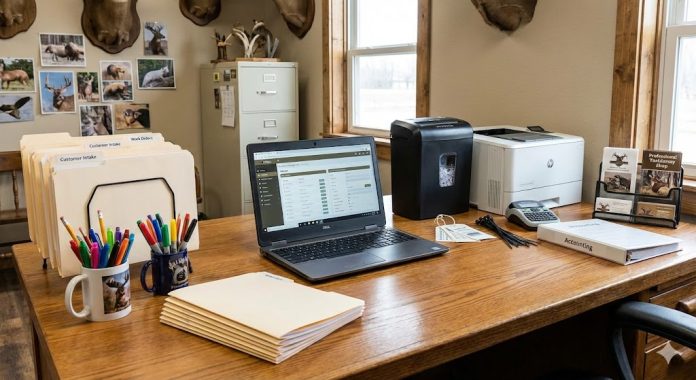
  • The Accordion Folder Method: For the smaller, daily expenses (like gas or hardware store runs), label an accordion folder by month. Drop every physical receipt into the corresponding month as soon as you get it.

  • Pro Tip: Keep your carbon copy receipt books intact. Don’t tear pages out randomly; if an auditor ever asks questions, a chronological book is your best defense.

4. Modernizing Your Shop: Custom Taxidermy Software

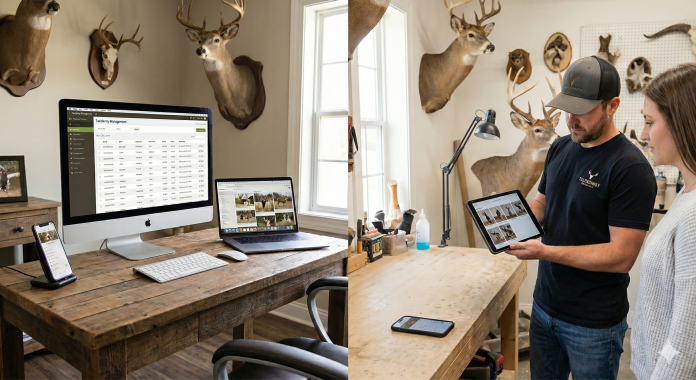
If you’re tired of the paper trail, consider moving to custom taxidermy management software. These tools (like MountMonitor, TSS Pro, or Taxidermy Workshop) are built specifically for the workflow of a shop.

  • Track Everything: Follow a mount from intake to the trophy room in one digital file.

  • Financial Sync: Most of these tools track income and expenses in real-time and can sync directly with QuickBooks, making tax time a push-button process.

5. Sales Tax: Don’t Ignore It

Sales tax is the quickest way to get in trouble with the state.

  • Ensure sales tax was charged on every applicable job.

  • Verify that it was filed and paid to the state.

  • Never treat sales tax as shop income—it’s money you are simply holding for the government.

6. Why an Accountant is Worth the Fee

A good accountant who understands small trades can catch deductions you’d miss. To save money on their hourly rate, bring them “clean” info:

  • Bank and credit card statements.

  • Those Year-End Statements from your supply companies.

  • Organized receipt folders (or your software reports).

  • Business mileage logs.

Bottom Line

Most taxidermy shops aren’t messy—they’re just busy. A little organization now prevents a massive headache in April. Get those supplier statements, match your deposits, and lean on a pro for the heavy lifting. Then, get back to the mounting stand.

Organizing Your Taxidermy Shop: Creating an Efficient, Professional Work Layout

0

Organizing Your Taxidermy Shop: Creating an Efficient, Professional Work Layout

A well-organized taxidermy shop isn’t just about looking clean—it directly affects your speed, quality, safety, and profitability. Whether you’re mounting one deer a year or running a full-time studio, the way your tools and workspaces are laid out can make the difference between smooth workflow and constant frustration.

This guide breaks down how to organize your taxidermy shop for efficiency, cleanliness, and long-term success.

Why Shop Organization Matters in Taxidermy

Taxidermy involves sharp tools, chemicals, delicate hides, and detailed craftsmanship. Poor organization leads to:

  • Lost time searching for tools

  • Cross-contamination between dirty and clean work

  • Increased mistakes and damaged hides

  • Physical strain and fatigue

An organized shop allows you to work faster, stay cleaner, and produce more consistent, professional mounts.

Start With Defined Work Zones

The foundation of an efficient shop is separating tasks into dedicated areas. This prevents the “wet” mess of skinning from ever touching the “dry” finishing area and protects your final product.

Common Taxidermy Work Zones

Skinning & Fleshing Area
Messy, wet, and high-contamination. This area should have easy-to-sanitize floors, walls, and surfaces.

Tanning & Chemical Area
A controlled, well-ventilated space for degreasing, pickling, and chemical application.

Mounting & Form Work Area
Clean, organized, and detail-focused. This is where accuracy and consistency matter most.

Finishing & Grooming Area
A dedicated “clean room” feel for airbrushing, grooming, and final detail work.

Tool Storage & Prep Area
A centralized location for daily-use tools that allows you to reset and prepare equipment between mounts without cluttering your primary workbench.

Plan for Seasonal Workload Surges

During peak seasons, organization matters even more. Design your shop so extra capes, forms, and unfinished mounts can be staged without disrupting workflow. Temporary shelving, rolling carts, and clearly labeled overflow storage help prevent bottlenecks and rushed mistakes when volume spikes.

Precision Lighting and Digital Record-Keeping

Efficiency isn’t just physical—it’s visual and administrative.

Color-Correct Lighting
In your finishing and grooming area, invest in CRI 90+ (Color Rendering Index) lighting. Standard shop lights can distort colors, leading to painting errors that only show up when the client takes the mount into natural light.

Digital Organization
Keep a dedicated space—or a wall-mounted tablet—for record-keeping. Organized digital logs for federal and state permits, intake tags, and client notes ensure compliance without shuffling through paperwork during an inspection.

Organize Tools by Frequency of Use

One of the most common mistakes in a taxidermy shop is storing all tools together regardless of how often they’re used.

Daily-Use Tools (Within Arm’s Reach)
Scalpels, modeling/tucking tools, needles, and measuring tools. Use magnetic strips or pegboards mounted at eye level.

Occasional-Use Tools (Nearby)
Power tools, specialty jigs, and airbrush equipment stored within easy reach but off primary work surfaces.

Rare-Use Tools (Labeled Storage)
Seasonal tools or backup equipment stored in clearly labeled bins or cabinets.

Inventory Protection: Pest Control & Storage

Organization in a taxidermy shop is also about defense. Raw capes and finished mounts are high-value targets for insects and rodents.

Freezer Organization
Keep a written or digital inventory of each freezer’s contents. Organized tracking saves time, minimizes door-open time, and prevents specimens from being overlooked or improperly thawed.

Regular Inspections
Keep storage areas off the floor to make sweeping and inspection easier and to quickly spot signs of beetles or moths.

Safety and Chemical Control

Taxidermy chemicals require careful storage for both personal safety and professional liability protection.

Flammables
Store solvents, paints, and adhesives in a dedicated metal flammable-storage cabinet.

Fire Safety
Establish a strict protocol for oily rag disposal. Use a UL-listed oily waste can to prevent spontaneous combustion.

Ventilation
Ensure chemical and painting zones have active exhaust systems that pull fumes away from your breathing zone.

Design Workbenches for Comfort and Efficiency

Your workbench should work for you, not against you.

Ideal Height
Set benches at a height that prevents slouching and reduces fatigue during long mounting sessions.

Surface Material
Use non-porous, easy-to-sanitize materials such as stainless steel or heavy-duty HDPE for prep areas.

Task Lighting
Install dedicated LED task lights directly over mounting stands and detail work areas.

Establish a Clean-As-You-Go System

The most organized shops aren’t spotless because of big cleanups—they stay clean through consistent habits.

  • Put tools back immediately after use

  • Wipe benches between tasks

  • End each day with a 10-minute reset

Final Thoughts

You don’t need a massive shop or expensive cabinetry to be organized—just intentional layout, smart storage, and consistent habits. Invest time in organizing your shop now, and it will pay dividends in efficiency, craftsmanship, and professionalism for years to come.

Even if clients never see your workspace, organization shows in cleaner mounts, consistent detail work, and predictable turnaround times.

The 10-Minute Reset: Quick Wins

Before you turn off the lights tonight, do these three things:

  1. Clear your primary mounting bench so you can start fresh tomorrow.

  2. Re-index or sharpen your most-used scalpels and knives.

  3. Take out the “wet” trash to prevent odors and pests overnight.

Your morning self will thank you.

- Advertisement -

MOST POPULAR

HOT NEWS

Skip to toolbar