
The Importance of Freezer Alarms in a Taxidermy Shop
Why Freezer Monitoring Matters in Taxidermy
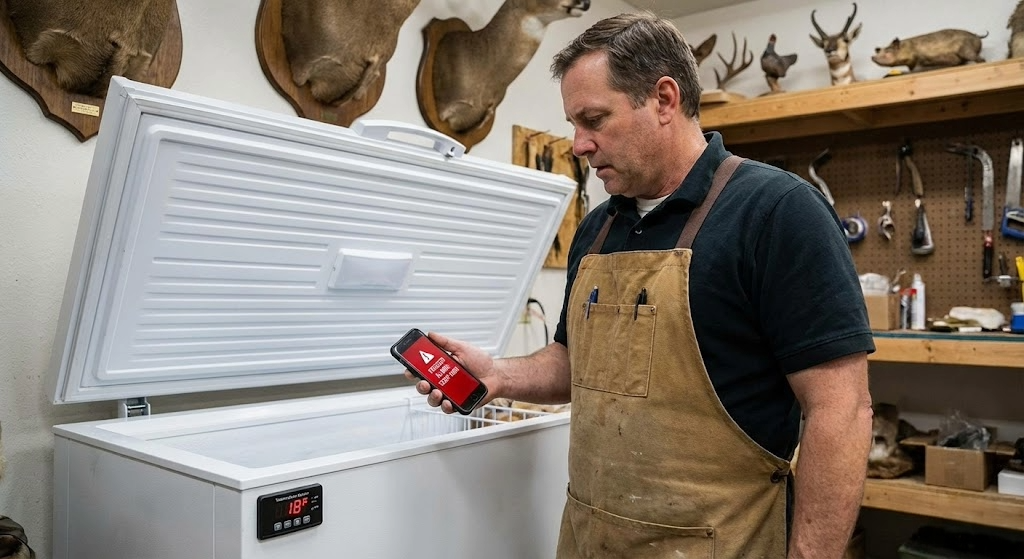
In a taxidermy shop, freezers don’t just store food — they protect irreplaceable memories.
Each cape, hide, bird, or shoulder mount represents:
-
A once-in-a-lifetime hunt
-
A client’s investment
-
Your shop’s reputation
-
Weeks or months of work
A single overnight freezer failure can mean:
-
Bacterial spoilage
-
Hair slippage
-
Cape degradation
-
Loss of customer trust
-
Thousands of dollars in liability
Unlike restaurants that may lose inventory, taxidermists risk losing irreplaceable trophies.
That’s why freezer alarms aren’t optional — they’re essential risk management.
Types of Freezer Alarms for Taxidermy Shops
There are several levels of freezer monitoring systems, ranging from simple audible alarms to full remote monitoring with data logging.
1. Built-In Audible Temperature Alarms
What they are:
Many commercial chest and upright freezers come with factory-installed high-temperature alarms.
How they work:
-
Trigger when internal temperature rises above a preset threshold
-
Emit an audible beep or tone
Pros:
-
Inexpensive
-
No installation required
-
Immediate on-site alert
Cons:
-
Only helpful if someone is physically present
-
No remote notification
-
No historical data tracking
Best for: Small shops with daily on-site presence — but not sufficient alone for overnight protection.
2. Plug-In Power Failure Alarms
What they are:
Devices that plug into an outlet and alert you when power is lost.
How they work:
-
Sound an alarm if electrical current stops
-
Some models use battery backup
Pros:
-
Affordable
-
Easy setup
-
Protects against breaker trips or outages
Cons:
-
Only detects power loss (not compressor failure)
-
Usually local alarm only
-
No temperature monitoring
Important note:
A freezer can fail mechanically while still receiving power. Power alarms alone are not enough protection.
3. Wireless Temperature Alarm Systems
What they are:
Independent temperature sensors placed inside the freezer that transmit data wirelessly.
How they work:
-
Sensor monitors internal temperature continuously
-
Sends alerts via:
-
Smartphone app
-
Text message
-
Email
-
Push notification
-
Pros:
-
Remote monitoring
-
Custom temperature thresholds
-
Battery backup options
-
Affordable compared to commercial systems
Cons:
-
Consumer-grade systems may lack industrial durability
-
Wi-Fi dependent unless cellular backup is included
Best for:
Most small-to-mid-sized taxidermy shops looking for reliable overnight protection.
4. Cellular-Based Monitoring Systems
What they are:
Standalone monitoring systems using cellular networks instead of Wi-Fi.
How they work:
-
Temperature sensor connects via cellular signal
-
Sends real-time alerts even if Wi-Fi fails
Pros:
-
Works during internet outages
-
More reliable in rural areas
-
True 24/7 monitoring
-
Often includes data logging
Cons:
-
Monthly subscription cost
-
Higher upfront cost
Ideal for:
Rural taxidermy shops or businesses storing high-value inventory.
5. Commercial Environmental Monitoring Systems
What they are:
Professional-grade monitoring systems used in labs, medical facilities, and food storage.
Features may include:
-
Multiple freezer monitoring
-
Data logging & compliance reports
-
Alarm escalation (call → text → email)
-
Backup battery systems
-
Power failure detection
-
Cloud dashboards
Pros:
-
Highest reliability
-
Documented temperature history
-
Insurance and liability documentation
-
Multi-location monitoring
Cons:
-
Higher cost
-
Installation/setup required
Best for:
High-volume taxidermy studios storing dozens of capes or long-term specimen storage.
6. Smart Plugs with Temperature Sensors
What they are:
Smart outlets paired with external temperature probes.
Pros:
-
Budget-friendly
-
Basic remote notification
Cons:
-
Often not rated for freezer-level cold internally
-
Less reliable long-term
-
Not purpose-built for critical storage
These should be considered a secondary safeguard, not primary protection.
Key Features to Look for in a Taxidermy Freezer Alarm
When choosing a system, taxidermists should prioritize:
1. Low-Temperature Capability
Must accurately monitor below 0°F.
2. Remote Alerts
Text message or phone notification is essential.
3. Battery Backup
Freezers fail during storms — so does power.
4. Power + Temperature Monitoring
You need both.
5. Data Logging
Useful for:
-
Insurance claims
-
Customer disputes
-
Quality control
Real Risks in a Taxidermy Shop
Freezers fail due to:
-
Compressor burnout
-
Door left cracked
-
Overloading
-
Power surges
-
Breaker trips
-
Storm outages
-
Extension cord failure
And spoilage can begin in hours — especially with thick capes.
Hair slip is irreversible.
The Financial Reality
Consider:
-
Average shoulder mount cape value: $500–$1,500+
-
Full body mounts: several thousand dollars
-
20 capes in a freezer = $20,000+ in exposure
A quality alarm system may cost:
-
$50–$300 for basic systems
-
$300–$1,000+ for commercial systems
-
$10–$40/month for cellular plans
Compared to one freezer loss — it’s minimal.
Risk Management & Reputation
In taxidermy, reputation is everything.
A freezer failure can mean:
-
Refunds
-
Replacement hunts (if possible)
-
Insurance claims
-
Online reputation damage
-
Loss of referrals
An alarm system is not just equipment — it’s business protection.
Conclusion
In a taxidermy shop, a freezer alarm is not a luxury. It is:
-
Inventory protection
-
Client protection
-
Reputation protection
-
Financial protection
Whether you choose a basic wireless system or a full commercial monitoring solution, the key is simple:
If you’re not alerted immediately, you’re not protected.